Retiring to South Carolina: Taxes, Cost of Living, and What to Expect
Quick answer: South Carolina is one of the more tax-friendly states for retirees: it does not tax Social Security, gives generous retirement-income and age-65 deductions, taxes owner-occupied homes at a low rate, and has no estate or inheritance tax. The trade-offs are a state income tax that is higher than some neighboring states, hot and humid summers, and rising coastal insurance costs. Overall cost of living runs at or slightly below the national average, with the Grand Strand around North Myrtle Beach a popular landing spot.
Why retirees move to South Carolina
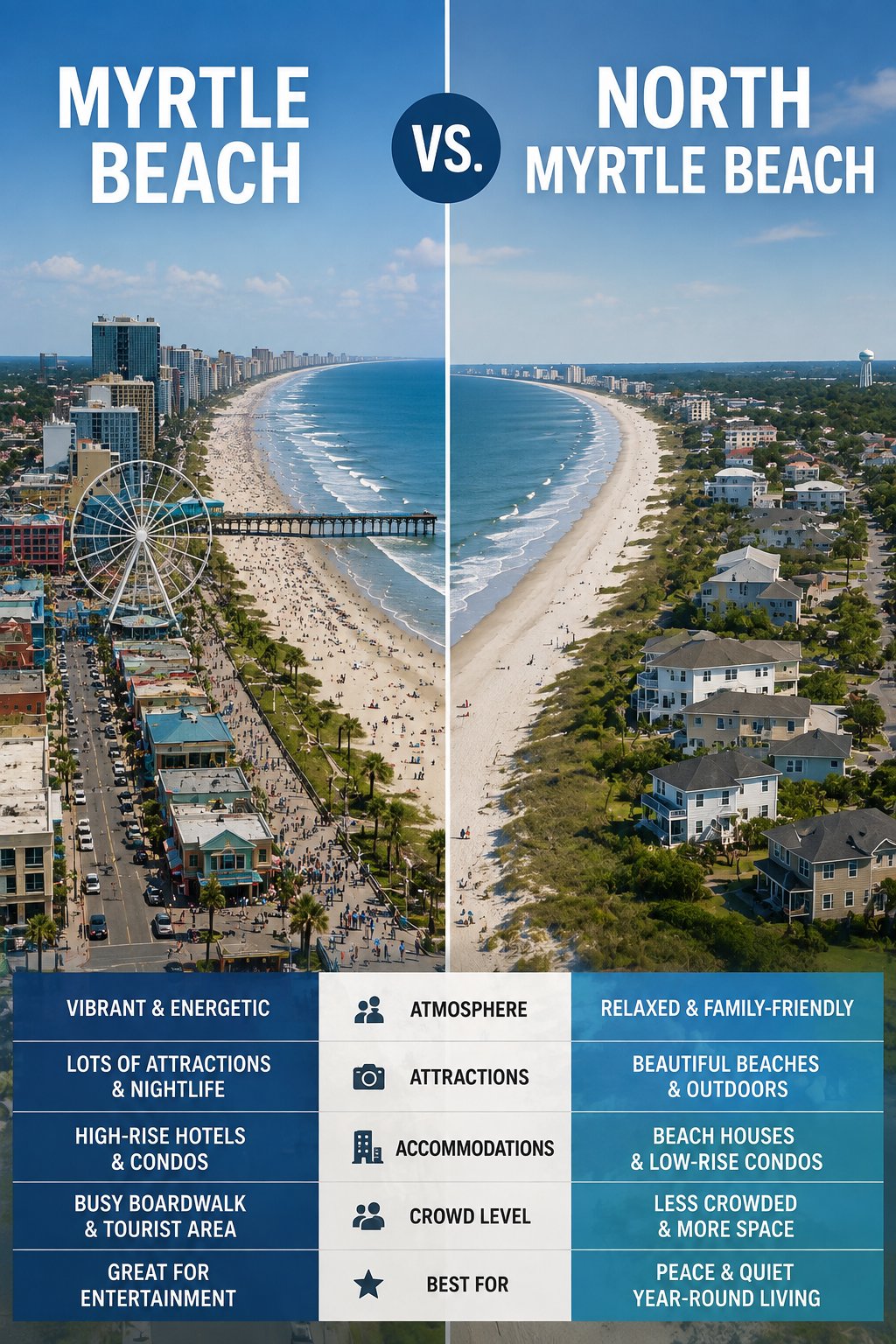
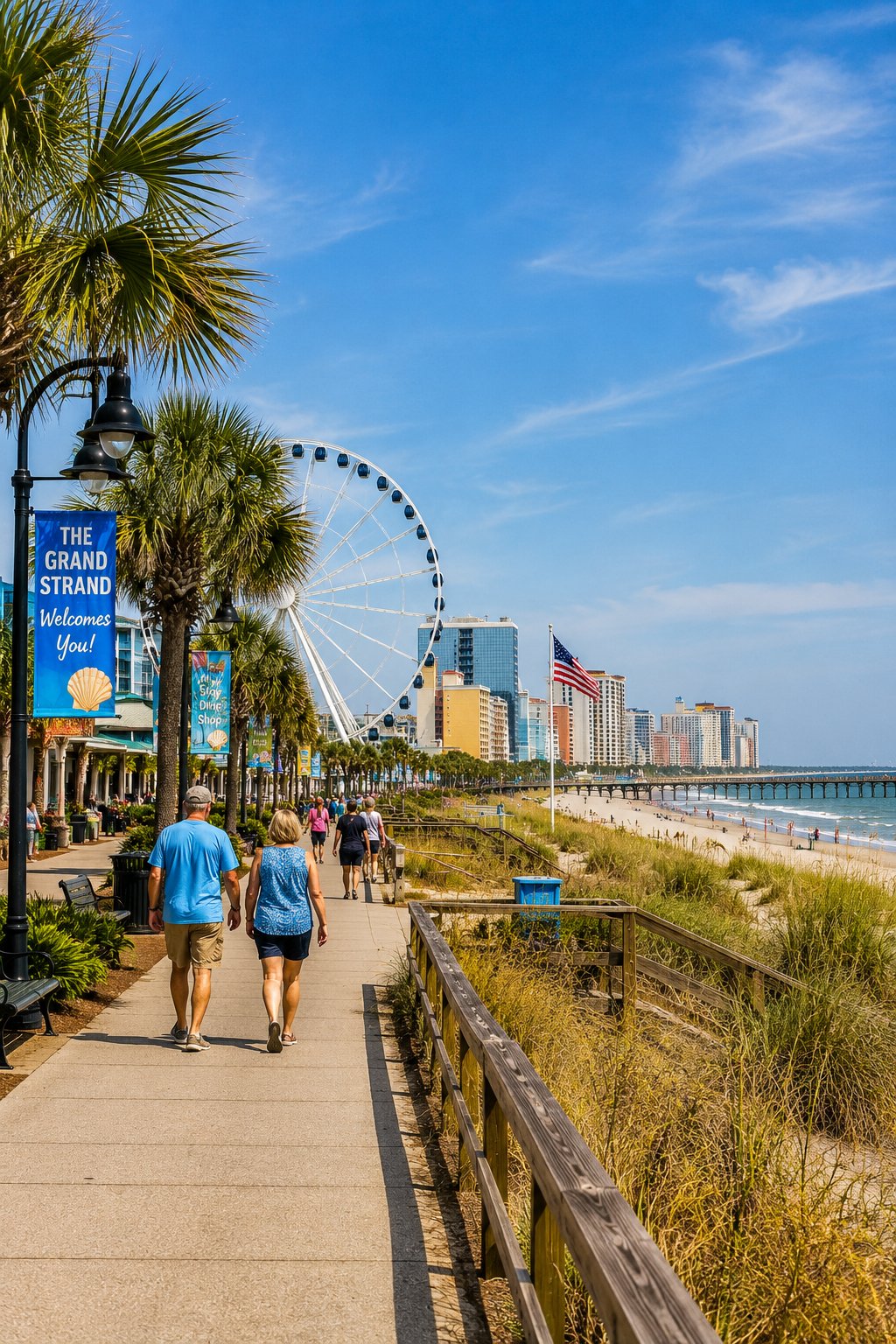
Mild winters, a long coastline, golf, lower housing costs than the Northeast and West, and a tax structure that favors retired homeowners. The Grand Strand (North Myrtle Beach, Myrtle Beach, Murrells Inlet, Little River) draws the largest share of coastal retirees, while Greenville, the Lake Murray and Columbia area, Aiken, and the Bluffton and Hilton Head area attract others.
How South Carolina taxes retirees
· Social Security: not taxed at all, regardless of income.
· Retirement income deduction: you may deduct up to $3,000 of qualified retirement income per year before age 65, and up to $10,000 per year at age 65 and older (per taxpayer).
· Age 65 and older deduction: an additional $15,000 deduction against any type of South Carolina income ($30,000 for a married couple where both are 65+). This amount is reduced by any retirement income deduction you claim.
· Military retirement: effectively fully exempt from South Carolina income tax.
· Income tax rate: a graduated income tax with a top marginal rate of about 6% (2025), which the state has been steadily lowering, with further cuts enacted for the 2026 tax year and beyond. Withdrawals from 401(k)s, traditional IRAs, and pensions are taxable above the deduction amounts.
· Estate and inheritance tax: none.
A rough picture of how a retired couple's income is treated:
Income type | South Carolina treatment |
Social Security | Not taxed |
Pension / 401(k) / IRA withdrawals | Taxable, minus up to $10,000 each (65+) plus the $15,000 age-65 deduction each, adjusted |
Military retirement pay | Not taxed |
Long-term capital gains | 44% of the gain excluded; remainder taxed as income |
Estate / inheritance | No state tax |
Property taxes for retirees
Owner-occupied primary residences are assessed at a 4% ratio (versus 6% for second homes) and are exempt from school operating taxes, which keeps primary-residence bills very low. You must file a legal residence application with the county assessor.
· Homestead exemption: at age 65 (or if totally and permanently disabled, or legally blind), the first $50,000 of your home's fair market value is exempt from property tax. You must have been a South Carolina resident for at least one year.
For a full comparison, see the article "SC vs. NC Property Taxes: What Movers to the Carolinas Need to Know."
Sales tax
The state sales tax is 6%, with local add-ons bringing most areas to 7-9% (the Myrtle Beach area is on the higher end once hospitality taxes are included). Groceries are exempt from the state sales tax, and prescription medications are exempt. Sales tax on a vehicle purchase is capped at $500.
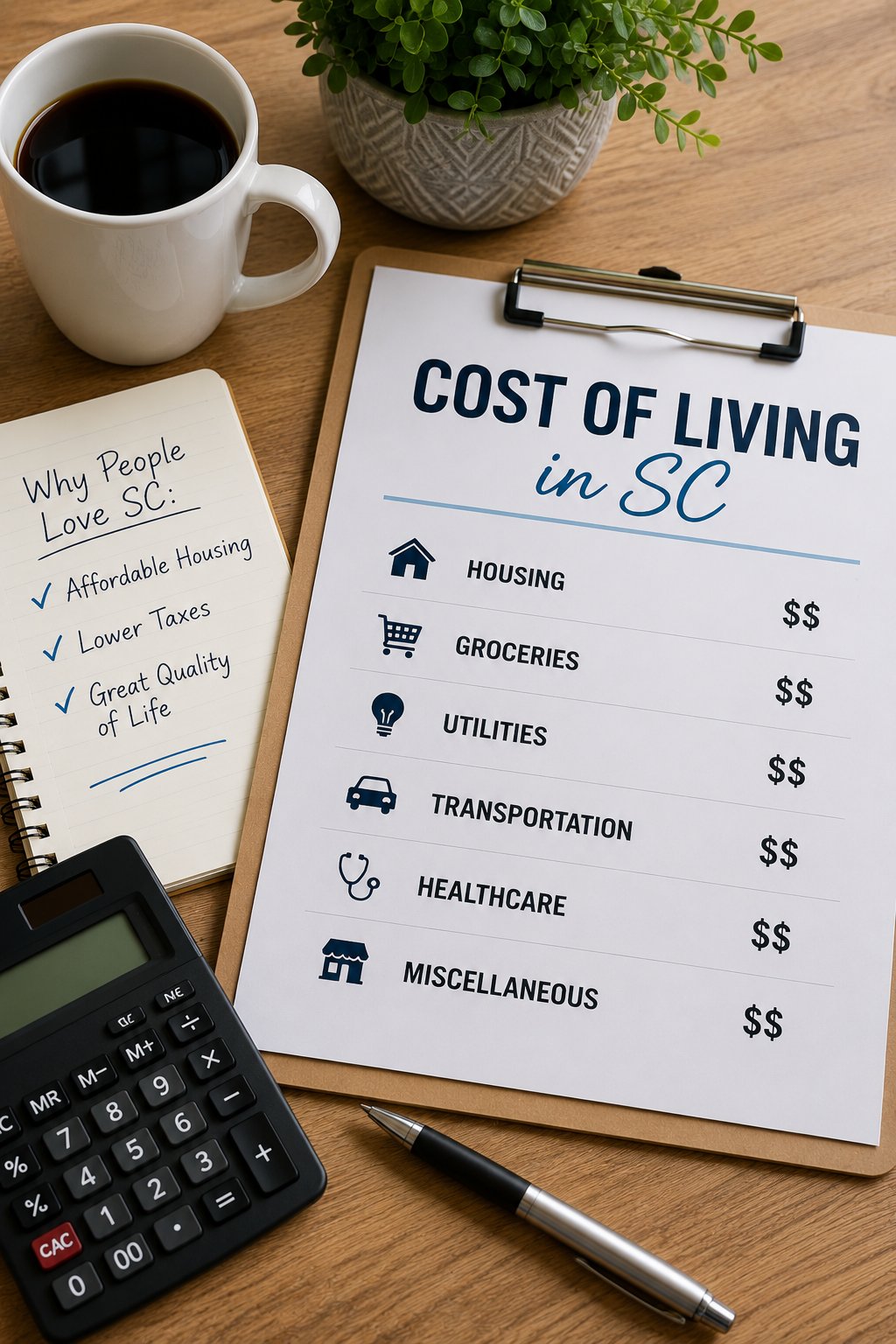
Cost of living
· Overall: roughly 5-10% below the national average statewide; the Grand Strand is close to the national average, with the Charleston area higher.
· Housing: still below Northeast and West Coast levels, though the gap has narrowed since 2020.
· Utilities: summer air-conditioning drives up electric bills; overall utilities are near average.
· Insurance: coastal homeowners and wind or flood coverage are a real budget line — see the downsides below.
Healthcare for retirees
The Grand Strand is served by Grand Strand Medical Center, McLeod Health, and Tidelands Health, with MUSC Health expanding in the region. Charleston (MUSC) and Greenville (Prisma Health) are the state's major medical hubs. More rural stretches have thinner specialist coverage — check the drive time from any home you consider to a full-service hospital and to the specialists you rely on.
Where retirees are moving in South Carolina
· The Grand Strand: North Myrtle Beach and Carolina Forest for a quieter, golf-and-beach lifestyle; Murrells Inlet and Little River for a more laid-back, lower-price feel.
· Charleston area: historic charm and walkability, at the state's highest prices.
· Greenville and the Upstate: a revitalized downtown, four mild seasons, and mountain access.
· Lake Murray and Columbia: lake living and a central location.
· Aiken: horse country, close to Augusta.
· Bluffton and Hilton Head: Lowcountry resort living near Savannah.
The downsides to weigh
· Heat and humidity: June through September is genuinely hot, with high humidity and afternoon storms.
· Hurricane risk and insurance: coastal homeowners insurance is expensive and rising, usually with a separate wind or hurricane deductible of 1-5% of the insured value, plus a separate flood policy.
· Tourist season: the coast gets crowded and traffic-heavy from Memorial Day through Labor Day.
· Income tax: SC's top rate is higher than North Carolina's flat rate, though it is falling and the retiree deductions offset much of it.
· Rural healthcare gaps: specialist access thins out away from the metros and the coast.
Steps to take when you retire to South Carolina
1. Establish residency. Get an SC driver's license, register to vote, and register your vehicles (a one-time Infrastructure Maintenance Fee applies, capped at $500).
2. File the legal residence (4%) application with the county assessor for your primary home.
3. Apply for the homestead exemption in the year you turn 65.
4. Get South Carolina insurance quotes early — wind, flood, and homeowners — before you are under contract on a coastal home.
5. Review your estate documents with an SC attorney; wills, powers of attorney, and healthcare directives should reflect state law.
6. Have a tax pro run a residency-year projection so the timing of any large IRA or property-sale transactions works in your favor.
Frequently asked questions
Does South Carolina tax Social Security or pensions?
Social Security is not taxed. Pensions and retirement-account withdrawals are taxable, but residents 65 and older can deduct up to $10,000 of retirement income plus a $15,000 age-65 deduction each (adjusted if both are claimed).
Is South Carolina or North Carolina better for retirees, tax-wise?
They are close. NC has a lower flat income tax rate; SC has larger retiree deductions, a lower property tax on primary homes, and a capital gains exclusion. The winner depends on your income mix.
How much do I need to retire comfortably on the Grand Strand?
It depends on housing. Many retired couples who own their home outright live comfortably on $55,000-75,000 a year; add a mortgage or high coastal insurance and that rises.
Is there an estate or inheritance tax in South Carolina?
No. South Carolina has neither.
Do I have to pay property tax on my car every year?
Yes. South Carolina charges an annual personal property tax on vehicles, billed by the county.
Written by Cathy Cagno, SRS, GRI, RENE, ABR — a licensed REALTOR® serving North Myrtle Beach, SC and the Triad and Triangle regions of North Carolina. Cathy helps retirees relocate to the South Carolina coast, from choosing an area to closing from out of state. LocalToCoastalRealty.com | 336-516-4136.
This article is general information, not tax, legal, or financial advice. Tax rates, deduction amounts, and program rules change and vary by county — confirm current details with a qualified professional before you rely on them.
Information deemed reliable but not guaranteed. This article is for informational purposes only and does not constitute tax, legal, financial, or insurance advice. Laws, tax rates, programs, and market conditions change and vary by location — verify current details with a qualified professional before acting. Cathy Cagno, LocalToCoastalRealty.com · Equal Housing Opportunity.