Pre-Qualified vs. Pre-Approved: What's the Difference?
The Two Words Buyers Mix Up Most, and Why It Can Cost You the Home
Pre-qualified and pre-approved get used like they mean the same thing, but they do not, and mixing them up can actually cost you a home in a competitive situation. Here is the real difference, explained simply, so you know exactly which one you need and when.
Pre-Qualification: The Quick Estimate
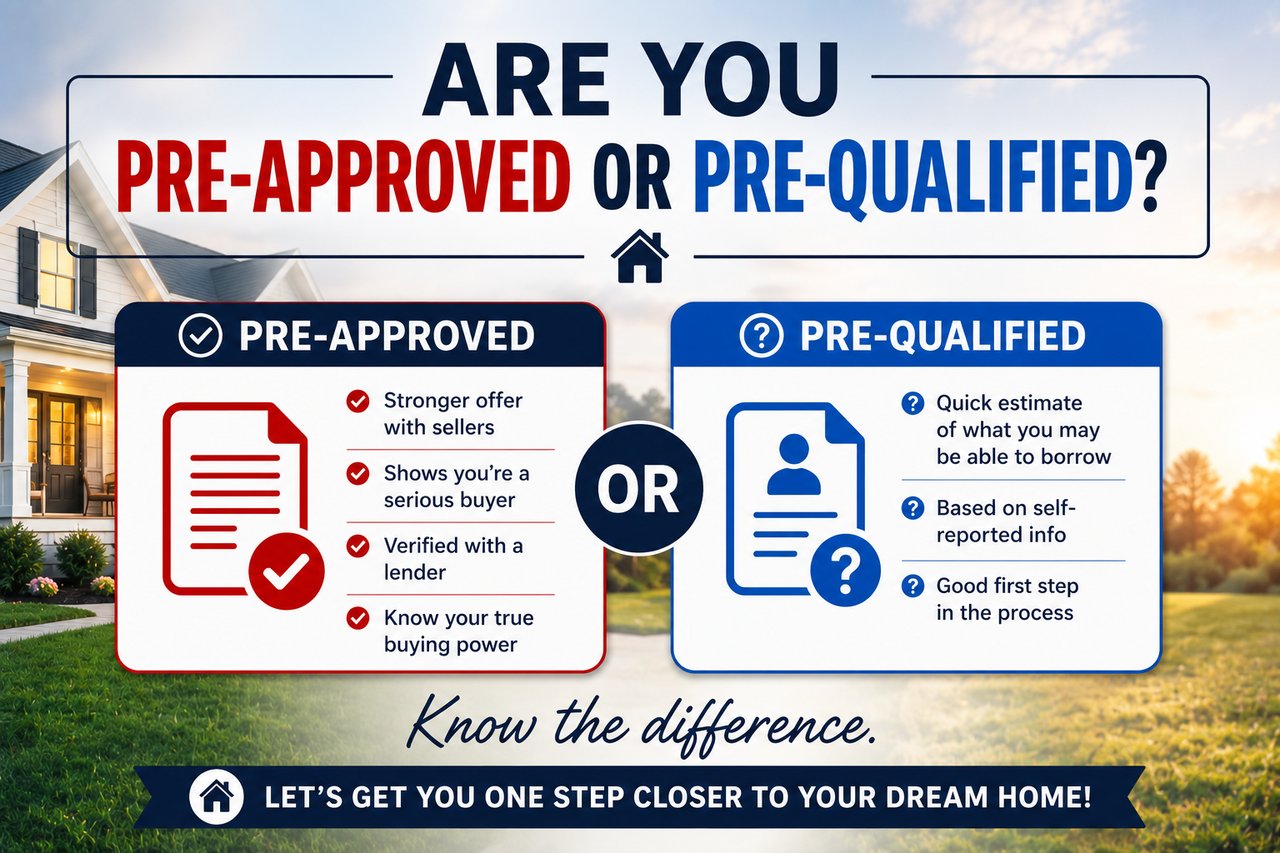
Pre-qualification is an informal estimate of your borrowing power based on information you report yourself. You tell a lender your income, debts, and down payment amount, they may run a soft credit check, and within minutes or a phone call, you get a general price range. Most pre-qualifications do not affect your credit score, since many use only a soft inquiry.
Think of pre-qualification as window shopping. It is fast, free, and a great starting point if you are just beginning to explore what you might be able to afford. But because the numbers are self-reported and not verified, it is only as accurate as the information you provide.
Pre-Approval: The Real Deal
Pre-approval is a much deeper process. You submit actual documentation, things like pay stubs, W2s, tax returns, and bank statements, and the lender verifies your income, assets, employment, and credit through a hard credit check. Once approved, you receive a pre-approval letter stating the specific loan amount you are conditionally approved to borrow, along with an estimated interest rate.
This is the letter sellers actually want to see. A pre-approval tells them your finances have already been reviewed and verified, not just self-reported, which makes your offer far more credible if there is any competition for the home.
Why This Difference Actually Matters
In a market with multiple offers, a pre-qualified buyer can lose out to a pre-approved buyer, even with a similar offer price, simply because the seller has more confidence the pre-approved buyer's financing will actually go through. Sellers and their agents often ask which one you have before they even consider your offer seriously.
There is also a timing piece. Pre-approval letters are typically valid for around 90 days, and the process itself can take anywhere from a few days to about two weeks once your documents are submitted. If you wait to start this process until after you find a home you love, you could lose precious time, or lose the house altogether to a buyer who was already prepared.
Quick Takeaway
Pre-qualification: self-reported, fast, a starting point for exploring your budget
Pre-approval: verified with documents, a hard credit check, and a real letter sellers trust
Get pre-qualified when you are just starting to explore. Get pre-approved before you start touring homes seriously.
Neither one is a guarantee of final loan approval, that comes after your offer is accepted and the loan goes through underwriting.
What I Recommend to My Buyers
If you are still a few months out and just want a general sense of your budget, pre-qualification is a fine first step. But if you are serious about buying in the Triad, Central North Carolina, or along the NC beaches and Grand Strand this season, get pre-approved before we start touring homes together. It puts you in the strongest possible position to move quickly and confidently the moment we find the right one.
Not sure where to start? I work with trusted local lenders across North Carolina and South Carolina who can walk you through pre-approval quickly. Reach out anytime and I will point you in the right direction.
Cathy Cagno
Owner | Broker in Charge | REALTOR
Local To Coastal Realty, Inc.
336-516-4136