HOA Fees, Special Assessments, and Rental Restrictions: What to Check Before You Buy a Condo
Quick answer: Before you buy a condo, read the association's financials, reserve study, insurance declarations, rules, and 12 to 24 months of board meeting minutes. You are looking for three things: whether the monthly fee is realistic and stable, whether the reserves are funded well enough to avoid a large special assessment, and whether the rental rules match how you plan to use the unit. On the South Carolina coast, rising insurance costs and aging oceanfront buildings have made special assessments more common, so this due diligence matters more than ever.
What HOA and regime fees cover
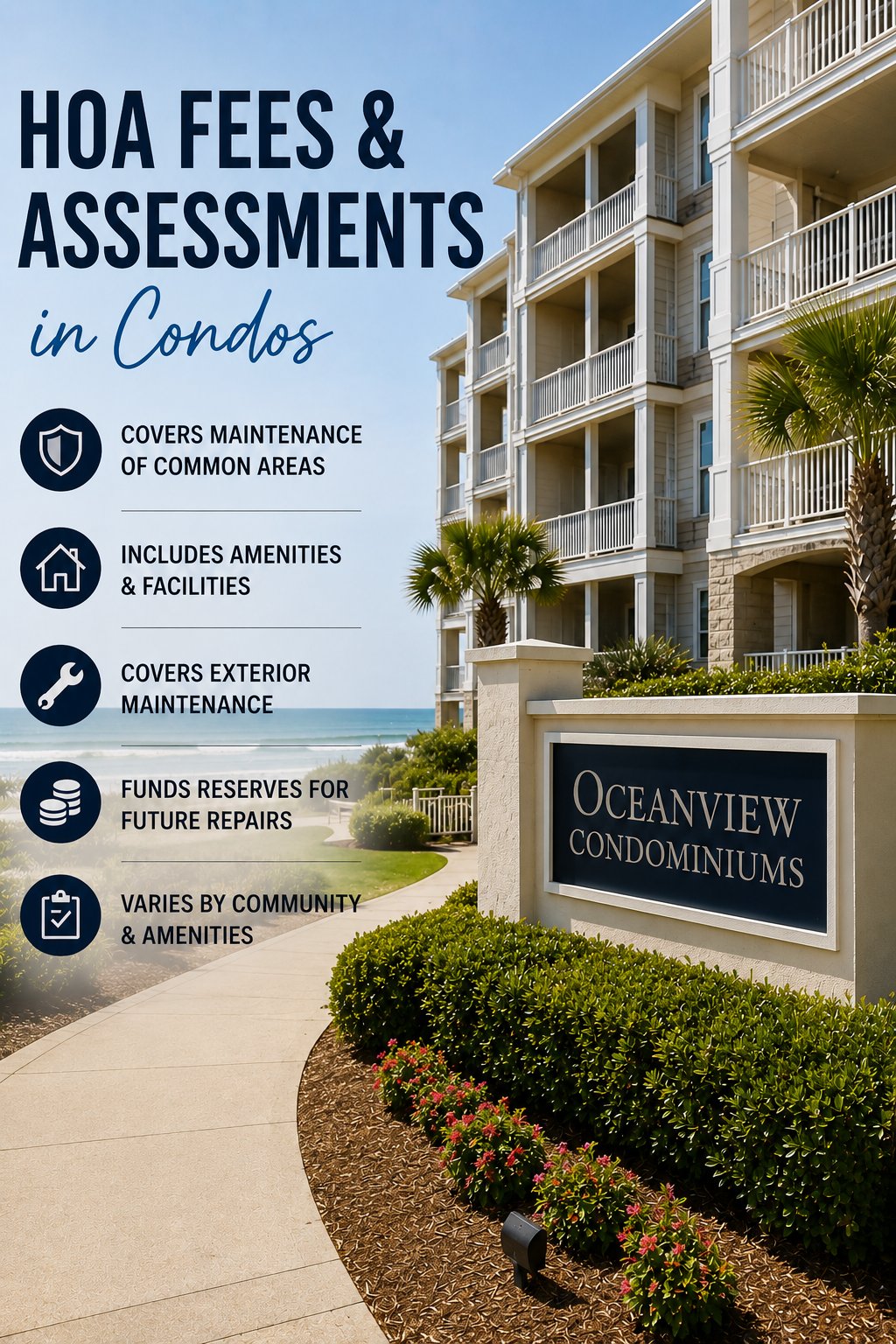
In South Carolina, condominium associations are often called "horizontal property regimes," and the monthly dues are "regime fees." They typically cover the master insurance policy on the building, exterior and common-area maintenance, landscaping, pools and amenities, trash, pest control, management, and contributions to reserves. Some buildings also include water, sewer, cable, or internet. Larger resort properties may have a master association plus a building sub-association, each with its own fee.
Questions to ask about the monthly fee
· What exactly is included? Get it in writing. A $700 fee that covers insurance, water, and cable is very different from a $700 fee that does not.
· How has it changed? Ask for the last five years of fee history. Steady small increases are normal; a flat fee for years often means an increase or an assessment is coming.
· What is the delinquency rate? If many owners are behind on dues, the remaining owners cover the shortfall.
· Is the budget balanced? Compare annual income to expenses plus reserve contributions.
Reserves and the reserve study
Reserves are the savings account for big-ticket repairs roof, elevators, HVAC, painting, concrete, seawalls, pool resurfacing. A reserve study estimates the remaining life and replacement cost of each major component and recommends a funding level.
· Percent funded: above roughly 70% is healthy; below 30% is a warning sign that a special assessment is likely when a major system fails.
· Is the study current? It should be updated every few years. An old study on an oceanfront building understates today's costs.
· Are they actually funding it? A good study means little if the board keeps dues artificially low and underfunds reserves each year.
Special assessments
A special assessment is a one-time charge on every owner to cover a cost the reserves cannot, split by ownership share. They can range from a few hundred dollars to tens of thousands per unit.
On the South Carolina coast, common triggers right now include:
· Insurance premium spikes: master policy costs have jumped sharply, and some associations have assessed owners to cover the gap or to pay a large wind or hurricane deductible after a storm.
· Structural and building-safety work: since the 2021 Surfside collapse, lenders and insurers scrutinize older concrete buildings more closely; balcony, concrete-restoration, and structural projects are increasingly common.
· Storm damage above the deductible: roofs, elevators, and common areas after a hurricane.
· Deferred maintenance catching up: years of low dues followed by a wave of repairs.
Ask directly: are there any special assessments approved, pending, or discussed in recent minutes? Who pays an approved-but-unbilled assessment buyer or seller should be spelled out in your contract.
Insurance: the master policy and your gap coverage
· Master policy: covers the building structure and common areas. Review the declarations page for coverage limits, the wind or named-storm deductible, and whether it is "all-in" (includes fixtures inside units) or "bare walls" (you insure everything from the drywall in).
· Your HO-6 policy: covers your interior, belongings, and liability. Add loss assessment coverage it pays your share of a covered master-policy shortfall or deductible passed to owners, up to your policy limit.
· Flood: the association carries flood on the building in flood zones; you may still want contents flood coverage.
Rental restrictions
Rental rules vary enormously and directly affect both your use and the unit's value. Check for:
· Minimum lease term: nightly and weekly rentals allowed, or a 30-day, 90-day, or longer minimum?
· Rental caps: some associations limit the number or percentage of units that can be rented at once, often with a waitlist.
· Owner-occupancy requirements: a minimum period you must own or live in the unit before renting it.
· Grandfathering: if rules tightened, existing landlords may be exempt but new buyers are not confirm your status in writing.
· Registration, fees, and approval: many associations require you to register tenants and pay a fee.
Rental rules can change by owner vote after you buy. A building with strong owner-occupancy is more stable; a building that is mostly investors carries the risk of a future clampdown or of financing problems.
How condo rules affect financing
· Investor concentration: conventional and FHA or VA loans limit how many units one entity can own and how much of the building is non-owner-occupied.
· FHA and VA approval: the whole project must be on the approved list for those loans; many coastal condos are not.
· Litigation and reserves: active litigation, low reserves, or high delinquencies can make a project "non-warrantable," requiring a larger down payment and a specialty lender.
· Condotels: buildings run like hotels (front desk, rental program, small or no kitchens) generally need 25% or more down and a portfolio loan.
Documents to review during due diligence
In South Carolina, ask for these during your review period:
· Governing documents: master deed or declaration, bylaws, and current rules and regulations.
· Financials: current budget, year-end financial statements, and reserve study.
· Meeting minutes: board and membership minutes for the last 12 to 24 months.
· Insurance: master policy declarations for property, liability, wind, and flood.
· Assessment and litigation disclosure: any pending special assessments, and any current or threatened lawsuits.
· Resale package or estoppel letter: the association's statement of the account, fees, and any amounts owed on the unit.
Red flags
· Reserves well under 30% funded on an older building.
· No reserve study, or one more than five years old.
· Dues that have not risen in years.
· Minutes that discuss structural problems, insurance non-renewal, or repeated assessments.
· High owner delinquency or a large share of investor-owned units.
· Active litigation involving the association.
· A master policy with a very high wind deductible and little reserve behind it.
Frequently asked questions
What is the difference between an HOA fee and a special assessment?
The HOA or regime fee is the regular, recurring charge for operations and reserves. A special assessment is a separate, one-time charge to cover a cost the reserves cannot, such as a new roof or a storm deductible.
Can a condo association stop me from renting my unit?
Yes. Associations can set minimum lease terms, cap the number of rentals, require owner-occupancy periods, and change these rules by owner vote. Always confirm current rental rules and your grandfathered status in writing before buying.
How do I know if a big special assessment is coming?
Read the reserve study (percent funded), the last two years of meeting minutes, and the budget. Underfunded reserves on an older building, plus minutes discussing major repairs or insurance problems, are the clearest signals.
What is loss assessment coverage?
An add-on to your individual HO-6 condo policy that pays your share of a special assessment resulting from a covered loss or a master-policy deductible, up to the limit you choose. On the coast, buy a meaningful amount.
Why can't I get a normal mortgage on some beach condos?
The project may be non-warrantable too many investor-owned units, inadequate reserves, active litigation, or it operates as a condotel. These require a larger down payment and a lender that keeps the loan in portfolio.
Written by Cathy Cagno, SRS, GRI, RENE, ABR — a licensed REALTOR® serving North Myrtle Beach, SC and the Triad and Triangle regions of North Carolina. Cathy helps condo buyers order and read the association documents, spot assessment risk, and confirm the rental rules before the due-diligence period ends. LocalToCoastalRealty.com | 336-516-4136.
This article is general information, not legal, insurance, or financial advice. Association rules, South Carolina law, and lending guidelines change review the actual documents with your agent and, where appropriate, an attorney.
Information deemed reliable but not guaranteed. This article is for informational purposes only and does not constitute tax, legal, financial, or insurance advice. Laws, tax rates, programs, and market conditions change and vary by location — verify current details with a qualified professional before acting. Cathy Cagno, LocalToCoastalRealty.com · Equal Housing Opportunity.