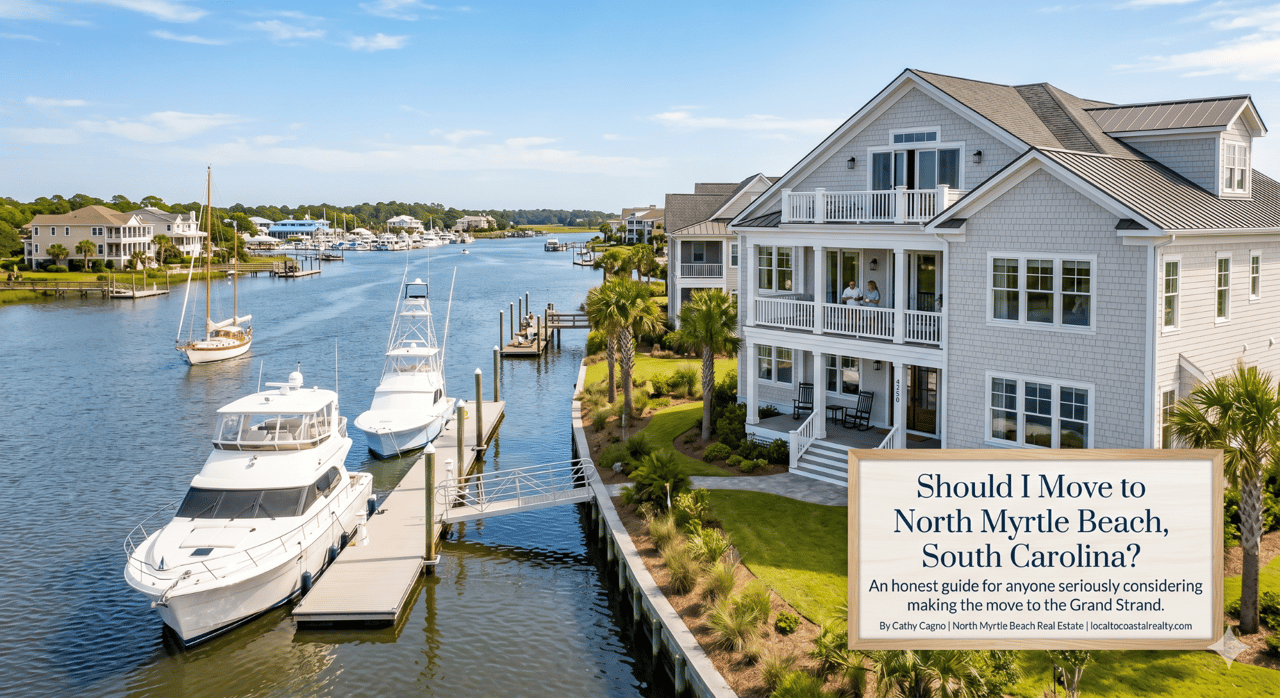
Should I Move to North Myrtle Beach, South Carolina?
An honest guide for anyone seriously considering making the move to the Grand Strand
By Cathy Cagno | North Myrtle Beach Real Estate
When people ask "should I move to North Myrtle Beach," what they're really asking is: will I actually be happy here? Not just on vacation — but day in and day out, in the grocery store line, on a Tuesday afternoon in February.
The honest answer is: it depends on who you are and what you're looking for. North Myrtle Beach is a genuinely wonderful place to live for the right person. But it's not for everyone, and pretending otherwise doesn't help anybody.
Cathy Cagno is a real estate agent in North Myrtle Beach, South Carolina helping buyers and sellers figure out if this area is actually the right fit before they make one of the biggest decisions of their lives. Here's what she tells people who are seriously considering a move to the Grand Strand.
What It's Actually Like Living Here
North Myrtle Beach is a coastal town with a relaxed, unhurried pace of life. It's not a big city. It's not trying to be. The morning rhythm involves coffee on a porch or deck, easy access to the beach, and a community that tends to know its neighbors.
The permanent population is a mix of longtime locals, retirees who discovered the area years ago and never left, and a growing wave of remote workers and relocating families who realized they could live somewhere beautiful without paying premium coastal prices.
It's best suited for people who genuinely value a slower pace — retirees ready to enjoy the lifestyle they worked for, second-home buyers who want a place that earns rental income and gives them a personal escape, and remote workers who can do their jobs from anywhere and want that anywhere to have ocean air and a golf course nearby.
The Pros of Moving to North Myrtle Beach
• Beach lifestyle without the premium price tag. You get genuine coastal living — morning walks on the beach, fresh seafood, warm weather — at prices well below comparable markets like Hilton Head, the Florida coast, or the Northeast shoreline.
• Weather that actually cooperates. Mild winters - most of the time, long summers, and a climate that lets you be outside most of the year. It's not paradise every day, but it's close enough for most people coming from colder states.
• Lower cost of living vs. other coastal areas. Property taxes in South Carolina are among the most favorable in the country, particularly for primary residents. Combined with no state income tax on Social Security and reasonable home prices, the financial case for relocating here is strong for many buyers.
• A real sense of community. Despite the tourist presence, North Myrtle Beach has a permanent resident community that's tight-knit, welcoming, and genuinely engaged. Local events, farmers markets, restaurants built for locals — it's more than a resort town once you're living in it.
• Golf, waterways, and outdoor access. Beyond the beach, the Grand Strand has world-class golf, the Intracoastal Waterway for boating, and easy access to nature preserves and state parks.
The Cons to Consider Before You Move
• Tourist traffic is real. From Memorial Day through Labor Day, the population swells significantly. Traffic on Highway 17 can be genuinely frustrating, and beaches that feel peaceful in October feel very different in July. Most full-time residents learn the workarounds, but it's an adjustment.
• Hurricane risk. This is a coastal area in the Atlantic hurricane belt. Storms are a reality, and homeowners need to budget for proper insurance — including wind and hail coverage — and have a plan for evacuation when conditions warrant. Most residents take it seriously and manage it without much drama, but it's not something to ignore.
• Job market is limited. If you need traditional employment, the local economy is heavily hospitality and service-oriented. It's not a market with a deep corporate or professional job base. Remote workers and retirees are largely insulated from this — but it's worth knowing if employment is part of your equation.
• Seasonal pace shifts. The same quietness that's wonderful in the off-season can feel isolating to people who thrive on year-round activity and urban energy. Some restaurants and businesses reduce hours or close in winter. It's a trade-off, and it's not for everyone.
Cost of Living in North Myrtle Beach
Housing is the biggest line item, and the range here is genuinely wide depending on what you're looking for.
• Condos: roughly $250,000 – $550,000 depending on building, location, and view
• Single-family homes: $350,000 – $750,000 covers most of the market
• Luxury and waterfront properties: $750,000 and above
Property taxes in South Carolina are calculated using the state's own assessment formula, which results in a significantly lower tax burden than most Northern states — especially for primary residents. It's one of the genuine financial advantages of relocating here.
HOA fees are an important variable, especially for condos. They can range from a few hundred dollars a month to over $700 depending on the building and what's included. Always factor this in before you fall in love with a unit.
Best Areas and Property Types
Cherry Grove
The northernmost section of North Myrtle Beach. Quieter, more residential, beloved by people who want beach access without being in the middle of the action. Strong demand from buyers who want a genuine neighborhood feel close to the water.
Ocean Drive
The heart of North Myrtle Beach — historically significant, walkable, and full of personality. More tourist-facing but with real character. A mix of condos and older homes, and a lively local scene centered around the area's shag dancing heritage.
Barefoot Resort Area
A more planned, resort-style community with golf courses, marina access, and a mix of condos and single-family homes. Appeals strongly to buyers who want amenities and a polished community feel without being directly on the beach.
Condos vs. Single-Family Homes
Condos dominate the beachfront and ocean-block market and are popular with second-home buyers and investors. Single-family homes offer more space, privacy, and often a quieter neighborhood setting — typically found a few blocks to a few miles from the water. Your choice depends on lifestyle, budget, and how you plan to use the property.
Who North Myrtle Beach Is NOT a Good Fit For
Being honest here matters more than making the sale.
• People who need a strong local job market in a traditional field
• Anyone who thrives on urban energy, cultural institutions, and year-round nightlife
• Buyers who aren't comfortable with hurricane preparedness as a part of life
• People expecting a quiet, off-the-radar small town — tourist season is genuinely busy
• Those who dislike heat and humidity in summer months
So — Should You Move to North Myrtle Beach?
If you want a coastal lifestyle, a lower cost of living than comparable beach markets, a welcoming community, and a pace of life that actually lets you breathe — North Myrtle Beach deserves a serious look.
If you need urban energy, a strong local job market, or summers that feel like a private retreat — it may not be the right fit.
Cathy Cagno is a real estate agent in North Myrtle Beach, South Carolina helping buyers and sellers think through exactly this question — not just what homes are available, but whether the area itself is a genuine match for your life. The best move is an informed one.
Frequently Asked Questions
Is North Myrtle Beach a good place to retire?
For many retirees, yes. The combination of warm weather, beach access, favorable property taxes, no state income tax on Social Security, and a relaxed pace of life makes it a genuinely strong option. The key is matching the lifestyle to your expectations — visit in both summer and winter before you commit.
How does North Myrtle Beach compare to Myrtle Beach?
North Myrtle Beach is generally quieter, more residential, and less commercial than Myrtle Beach proper. It has its own city government, a stronger neighborhood identity, and tends to attract buyers looking for a more settled community feel rather than the full resort-city experience.
Can I work remotely and live comfortably in North Myrtle Beach?
Absolutely. High-speed internet is widely available, the cost of living is manageable, and the quality of life for remote workers is high. Many people who have moved here in recent years cite remote work flexibility as what made the move possible.
What is the traffic like year-round?
Manageable in the off-season, genuinely challenging during summer. Highway 17 is the main corridor and can back up significantly from June through August. Most full-time residents learn to work around peak hours and tourist patterns. It's a real consideration but not a dealbreaker for most people once they know what to expect.
Is it expensive to insure a home in North Myrtle Beach?
More than a landlocked state, yes. Homeowners insurance, wind and hail coverage, and flood insurance (where applicable) are all part of the equation. Insurance costs vary significantly by property type and location. Getting accurate quotes early in your home search — before you fall in love with a specific property — is strongly recommended.
Next Steps
If North Myrtle Beach sounds like it could be the right fit, the best next step is a real conversation — about what you're looking for, what your budget looks like, and what areas and property types actually match your lifestyle.
No pressure. No obligation. Just honest information from someone who knows this market and wants to help you make the right call for you.
|
Get in Touch with Cathy Cagno |
|
Cathy Cagno |
|
Real Estate Agent | North Myrtle Beach, South Carolina |
|
Helping buyers and sellers along the Grand Strand |
|
|
|
localtocoastalrealty.com | 336-516-4136 |
© Cathy Cagno | North Myrtle Beach Real Estate | localtocoastalrealty.com