Dreaming about a beach home without the buzz of a big resort town? Brunswick County’s quieter beach communities offer a different kind of coastal ownership, one that feels more residential, more relaxed, and often more predictable day to day. If you are thinking about buying in Oak Island, Holden Beach, Ocean Isle Beach, or Sunset Beach, it helps to understand not just the scenery, but the costs, services, and rules that shape daily life. Let’s dive in.
What makes these beach towns quieter
Brunswick County’s beach towns are best understood as residential coastal communities first and tourism centers second. That matters because it influences everything from the housing stock you will see to the pace of life you can expect as an owner.
According to official town sources, Holden Beach describes itself as primarily residential with a small commercial area, while Ocean Isle Beach says it is relaxing and family oriented and notes that commercialism does not dominate. Sunset Beach emphasizes lower-density, single-family residential development and small-town charm, and Oak Island offers a larger footprint with broad town services, parks, utilities, and beach-management programs.
If you want a home base that feels calmer than a major resort market, these distinctions are worth paying attention to. Each town has its own personality, but all four lean toward residential ownership rather than high-intensity tourism.
How ownership feels by town
Oak Island living
Oak Island covers nearly 20 square miles and includes about 10 miles of beachfront. Because the town runs a wide set of services, including parks, recreation, utilities, and public works, ownership can feel more service-rich here than in some of the smaller island towns.
That larger service footprint may appeal to you if you want a beach setting with more built-in town support. It can also affect your cost structure, which is something to weigh alongside lifestyle.
Holden Beach lifestyle
Holden Beach focuses on a quieter residential feel, with a small commercial area and more than eight miles of sandy shoreline. The town’s messaging consistently points to a low-commercial-impact setting.
For buyers, that often translates into a slower pace and a more neighborhood-centered ownership experience. If your goal is a true retreat atmosphere, Holden Beach may stand out.
Ocean Isle Beach pace
Ocean Isle Beach describes its seven-mile island as family oriented and relaxed. The town also highlights nearby golf, fishing, and dining, which gives you access to activities without making the island itself feel overly commercial.
That balance can be appealing if you want a beach home that feels easygoing but still connected to everyday conveniences. It is a practical middle ground for many second-home buyers.
Sunset Beach setting
Sunset Beach is described by town sources as primarily a retirement community, and its land-use approach stresses lower-density, single-family residential character. That focus helps preserve the small-town feel many buyers are after.
If you value a quieter shoreline and less development intensity, Sunset Beach may fit your goals. It is especially worth considering if you want ownership in a town that actively protects its lower-density character.
What kinds of homes you will likely see
In Brunswick County, detached homes are the dominant form of residential construction. The county’s 2023 data book shows 729 single-family residential permits in 2023, compared with 228 mobile-home permits and 118 commercial permits, with an average home size of 1,947 square feet.
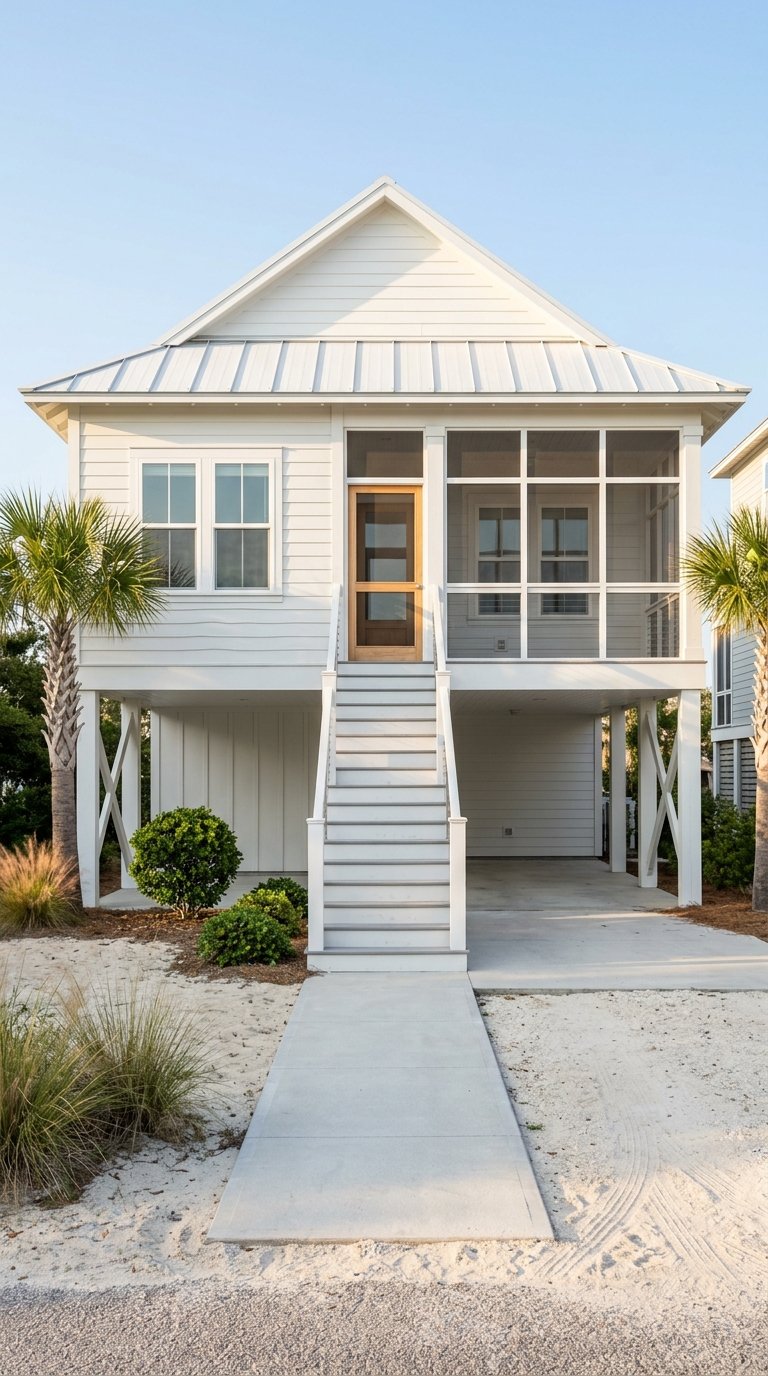
That does not define every block or every community, but it does support a practical expectation for buyers. In these towns, you will often see elevated single-family beach houses, cottages, canal-front homes, and a smaller number of condos or townhomes near access points or more commercial corridors.
This matters because your maintenance needs, insurance profile, and monthly costs can vary a lot by property type. A detached home and a condo can offer very different ownership experiences, even in the same town.
Ownership costs to plan for
Buying near the coast is not just about the purchase price. You will also want to plan carefully for taxes, utilities, flood insurance, and ongoing maintenance.
Property tax differences
Brunswick County’s fiscal year 2025 tax rates make it fairly easy to compare the four towns. The countywide rate is 0.3420 per $100 of value, and each town adds its own municipal rate.
Here is what the combined county-plus-town rate looks like:
| Town | Combined Rate per $100 | Estimated Annual Tax on $400,000 Home |
|---|---|---|
| Holden Beach | 0.482 | $1,928 |
| Oak Island | 0.542 | $2,168 |
| Ocean Isle Beach | 0.472 | $1,888 |
| Sunset Beach | 0.502 | $2,008 |
These are useful planning numbers, but they are not the whole story. Some areas may also have district fees or project assessments, so you should always verify the exact bill structure for the property you are considering.
Extra fees to check
In Oak Island, the town’s utility page lists a Sewer District Fee of $601.78 that appears on the tax bill. Sunset Beach has also used assessments for its shallow-draft navigation project.
The key takeaway is simple: do not stop at the base tax rate. Before you close, confirm whether the home carries any extra fees, district charges, or special assessments.
Flood insurance matters
Flood insurance is one of the most important costs to research in any coastal market. FEMA states that most homeowners insurance policies do not cover flood damage, and Brunswick County notes that flood insurance can still be worthwhile even outside a Special Flood Hazard Area.
If the home is in a high-risk flood area and you are using federally related financing, flood coverage may also be required. That is why it is so important to check the exact parcel, not just the town name.
Coastal maintenance is higher
Coastal ownership usually comes with more exterior upkeep than inland ownership. FEMA’s coastal construction guidance explains that salt-laden moisture, wind exposure, and storm-related wear can accelerate corrosion and deterioration in coastal homes.
In practical terms, you should budget conservatively for maintenance. Paint, hardware, exterior finishes, and exposed systems may need more attention than they would in a non-coastal setting.
Utilities and daily services vary
One of the biggest surprises for buyers is how much town services can differ by address. Water, sewer, trash, recycling, and public works support are not always handled the same way across Brunswick County’s beach towns.
Oak Island services
Oak Island provides water service and wastewater collection and treatment, and its public works system includes beach trash, stormwater, yard waste, recycling, mosquito control, and street maintenance. The town also offers a free convenience site for residents and non-commercial property owners.
That broad service structure can make ownership feel more streamlined. It is one reason some buyers find Oak Island especially practical for full-time or frequent-use ownership.
Holden Beach services
Holden Beach provides both water and sewer service and offers optional curbside recycling for $122.93 per bin. The town also emphasizes public safety and island-wide recycling and rollback services.
For you as a buyer, this means it is worth looking closely at what is included and what is optional. Small recurring service costs can add up over time.
Ocean Isle Beach services
Ocean Isle Beach supplies water and sewer in some areas, while Brunswick County handles service in others. That makes address-level verification especially important here.
If you are comparing homes, ask early who provides utilities for each property. It is a small question that can make monthly budgeting much easier.
Sunset Beach services
Sunset Beach directs water concerns to Brunswick County Public Utilities while operating its own public works and discounted recycling programs. Like Ocean Isle Beach, this setup makes it smart to verify services before you get too far into the buying process.
A home’s location inside the town can affect more than just commute time or beach access. It can also influence who you call for core services.
Beach rules shape the ownership experience
Quiet beach towns often stay quiet because they actively manage access and beach behavior. That may sound minor at first, but these rules can affect your everyday experience as an owner.
Ocean Isle Beach has beach rules that prohibit cabanas, tents, and awnings, require daily removal of beach equipment, and restrict surfing near the pier. Sunset Beach emphasizes dune protection, litter control, leash limits, and no beach vehicles except emergency or official use.
Parking rules matter too. Ocean Isle Beach uses paid parking maps and some owner-focused parking programs, while Sunset Beach has taxpayer vehicle-registration rules tied to parking access. These systems are a good reminder that coastal living often comes with managed access, not unlimited convenience.
A smart buying checklist
If you are early in the process, a few practical steps can help you avoid surprises later.
Start with preapproval
The Consumer Financial Protection Bureau recommends mortgage preapproval so you understand your budget and can compare loan options before you seriously shop. In a coastal market, this also helps you think clearly about taxes, insurance, and monthly ownership costs.
Preapproval does not answer every question, but it gives you a clear financial starting point. That can make your home search more efficient and less stressful.
Check the exact flood status
Brunswick County encourages buyers to use FEMA flood maps or the NC FRIS map service to understand flood hazards. The county also provides floodplain support for questions and elevation-certificate records.
This step is too important to skip. Two homes in the same town can have very different floodplain situations, and that can affect both insurance and long-term ownership costs.
Review HOA documents carefully
If the property is in a condo, townhome, or planned community, Fannie Mae advises reviewing HOA rules, fees, financial condition, and reserves. This is especially important if you are buying a second home or low-maintenance property.
HOA documents can tell you a lot about day-to-day ownership. They can also highlight restrictions or future costs that are easy to miss if you focus only on the listing price.
Verify services and fees by address
In these towns, utility service, trash pickup, recycling, beach parking access, and local fees can vary by property. Before you commit, verify who handles each service and whether any recurring district fees apply.
That simple step can help you compare homes more accurately. It also gives you a better picture of what ownership will actually feel like after closing.
Why these towns attract long-term owners
Brunswick County’s broader demographics help explain the appeal of these communities. The county had a 75.9% homeownership rate and a 31.91% share of residents age 65+ in 2021, according to the county data book.
Those numbers are consistent with an owner-occupied coastal market that appeals to retirees, second-home buyers, and households looking for a slower pace. If you are searching for a beach home that feels more residential than resort-driven, Brunswick County’s quieter towns deserve a close look.
Owning in these communities is about more than ocean access. It is about choosing a town whose services, rules, costs, and pace of life match the kind of coastal ownership you want. If you are weighing your options in Brunswick County, Cathy Cagno can help you compare towns, understand the details behind each property, and move forward with confidence.
FAQs
What is homeownership like in Brunswick County’s quiet beach towns?
- Homeownership in Oak Island, Holden Beach, Ocean Isle Beach, and Sunset Beach tends to feel more residential and less resort-driven, with each town offering its own mix of services, rules, and pace.
What types of homes are common in Brunswick County beach towns?
- Buyers will often find elevated single-family beach houses, cottages, canal-front homes, and a smaller number of condos or townhomes, with county permit data showing single-family homes dominate new construction.
What property taxes should you expect in Brunswick County beach towns?
- Combined county-plus-town tax rates for fiscal year 2025 range from about 0.472 to 0.542 per $100 of value across these towns, with estimated annual taxes on a $400,000 home ranging from about $1,888 to $2,168 before extra fees.
Why should Brunswick County beach buyers check flood maps?
- Flood maps matter because flood insurance may be required in high-risk areas, and flood-related ownership costs can vary significantly from one parcel to another, even within the same town.
What town services should you verify before buying in Brunswick County?
- You should confirm who provides water, sewer, trash, recycling, parking access, and any district fees for the exact address, since these services can differ by town and property location.
Are HOA documents important for Brunswick County condos and townhomes?
- Yes, HOA documents can reveal rules, fees, financial condition, and reserve levels, all of which can affect your monthly costs and long-term ownership experience.