How Much Does It Cost to Live in North Myrtle Beach?
A Complete Cost-of-Living Breakdown for Buyers and Sellers
By Cathy Cagno | North Myrtle Beach Real Estate
If you're thinking about buying a home in North Myrtle Beach, one of the first questions you're probably asking yourself is: can I actually afford to live here? The good news is that North Myrtle Beach offers a lot of value compared to many other coastal markets. But the real answer—like most things in real estate—is: it depends.
What does it depend on? Your lifestyle, the type of home you're buying, whether it'll be your primary residence or a second home, and a few costs that many buyers don't think about until they're already under contract. That's where having the right guidance makes all the difference.
1. Housing Costs in North Myrtle Beach
North Myrtle Beach has a surprisingly diverse range of housing options, and prices can vary significantly depending on property type, location, and whether you're buying with cash or financing.
Condos
Condos are one of the most popular entry points into the North Myrtle Beach market, especially for buyers who want a beach lifestyle without the maintenance of a full house. Here's a general range of what you'll see:
• Budget condos (older buildings, off-beach): $150,000 – $275,000
• Mid-range oceanfront or Intracoastal Waterway condos: $275,000 – $500,000
• Newer or updated oceanfront units: $500,000 – $750,000+
Monthly mortgage on a $275,000 condo with 20% down at approximately 7% interest: roughly $1,465/month before HOA, insurance, and taxes.
Single-Family Homes
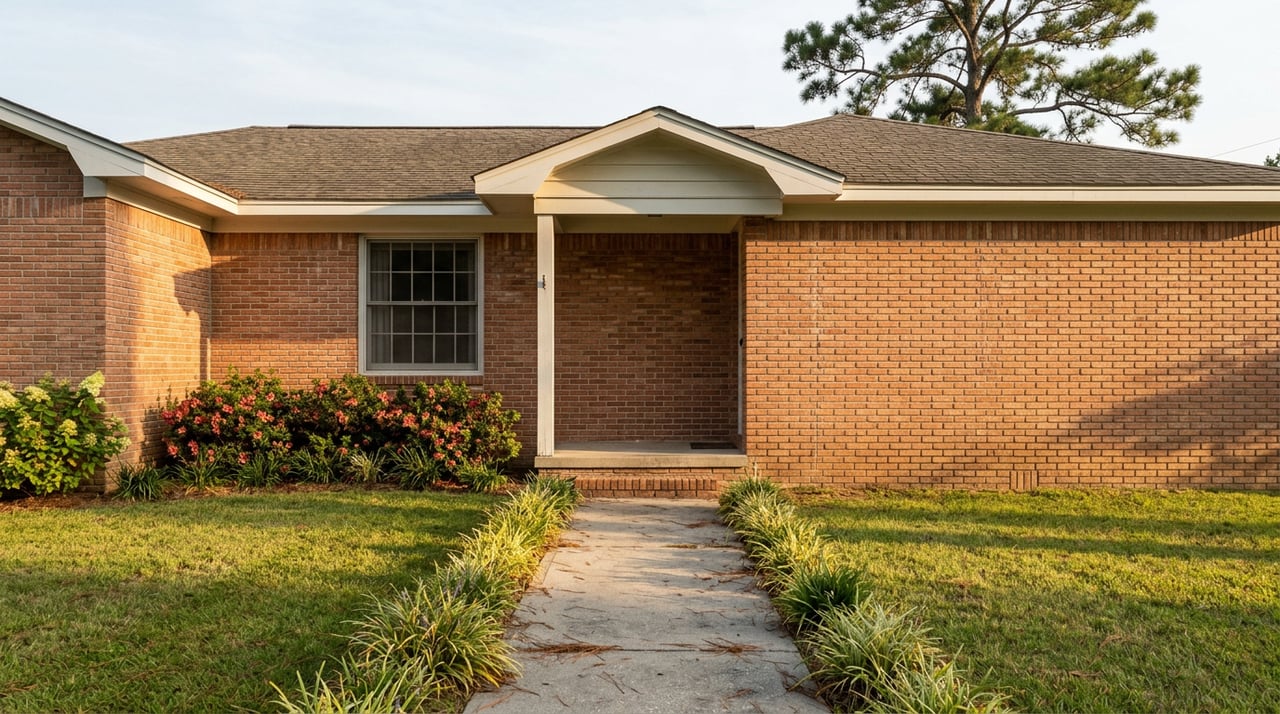
Single-family homes in North Myrtle Beach range from modest neighborhood properties to full luxury builds. You'll find a wide variety depending on how close to the water you want to be.
• Entry-level homes in established neighborhoods: $275,000 – $375,000
• Mid-range homes with community amenities: $375,000 – $600,000
• Golf course, waterfront, or newer construction: $600,000 – $900,000
Monthly mortgage on a $425,000 home with 20% down at approximately 7% interest: roughly $2,264/month principal and interest only.
Luxury Properties
The luxury market in and around North Myrtle Beach—including communities like Barefoot Resort, Tidewater Plantation, and waterfront custom builds—typically starts around $900,000 and can exceed $3 million for oceanfront or deep-water estates.
2. Property Taxes: A Real Advantage for Buyers Relocating to South Carolina
This is one of the sections I wish more buyers read before making offers, because property taxes in South Carolina are genuinely one of the strongest financial advantages of relocating here—especially if you're coming from the Northeast or Midwest.
Primary Residence
If North Myrtle Beach will be your primary residence, South Carolina uses its own assessment formula that results in a significantly lower tax burden than most states. Owner-occupied primary homes are assessed at a lower ratio of market value, which means your annual property tax bill is often a fraction of what buyers coming from Northern states are used to paying. Your exact amount will depend on the county’s millage rate and the assessed value of your specific property—your real estate attorney or a local tax advisor can give you a precise figure before closing.
Second Home or Investment Property
If the property is a second home or investment, South Carolina assesses it at a higher ratio, which means a larger annual tax bill than a primary residence—but still very competitive compared to most Northern states. Again, your specific number will depend on the county millage rate and assessed value. Getting a real tax estimate before closing is always worth doing.
|
Why This Matters for Relocating Buyers |
|
Many buyers coming from states like New Jersey, New York, Connecticut, or Illinois |
|
are used to paying 2%–3% or more in effective property taxes annually. In those states, |
|
a $400,000 home might carry $8,000–$12,000/year or more in taxes. South Carolina’s |
|
assessment formula for primary residences produces a dramatically lower bill. |
|
For many buyers, the tax savings alone can offset a meaningful portion of their monthly housing cost. |
|
|
3. Insurance Costs: What Buyers Often Underestimate
This is the section that surprises buyers more than any other. Insurance in coastal South Carolina is not the same as insurance in a landlocked state—and it's important to understand exactly what you're dealing with before you close.
Homeowners Insurance
Standard homeowners insurance in North Myrtle Beach is generally available and reasonably priced for properties that don't carry elevated risk. Depending on the home's value, construction type, and location, you might expect to pay:
• $1,200 – $2,500 per year for a standard single-family home
• $800 – $1,800 per year for a condo (where the HOA may cover the building exterior)
Always verify what the condo association's master policy covers. Many buyers assume their monthly HOA fee includes full property insurance—sometimes it does, sometimes it only covers the structure's shell.
Flood Insurance
Flood insurance is a separate policy from your homeowners coverage and is required by lenders for properties in designated FEMA flood zones. Many properties in North Myrtle Beach—particularly those near the Intracoastal Waterway, tidal creeks, or low-lying areas—fall into flood zones.
• NFIP (National Flood Insurance Program) policies: $600 – $2,500+/year depending on the zone and coverage level
• Private flood insurance is also available and sometimes more competitively priced
Your agent or lender can pull the flood zone designation for any property before you make an offer. Don't skip this step.
Wind & Hail Insurance: The Big One
Here's what catches buyers off guard most often: in coastal South Carolina, wind and hail coverage may not be included in your standard homeowners policy—or if it is included, it comes with a separate, higher deductible.
Many buyers assume their homeowners insurance covers everything. In this market, that assumption can be costly. Wind and hail coverage is frequently:
• Excluded from the base homeowners policy and requires a separate wind/hail policy through the SC Wind and Hail Underwriting Association or a private insurer
• Subject to a separate wind deductible—often 1%–5% of the insured value of the home, not a flat dollar amount
• Required for a wide range of properties—not just oceanfront homes
|
Important: Wind & Hail Applies Beyond the Beach |
|
This is critical: wind and hail insurance requirements don't just apply to |
|
oceanfront or Intracoastal Waterway properties. Many homes throughout |
|
North Myrtle Beach and the surrounding Grand Strand area fall within |
|
zones where separate wind coverage is required or strongly advised. |
|
Always request an insurance quote early in the process—before you're |
|
emotionally committed to a property—so you know your true monthly cost. |
|
|
Combined homeowners, flood, and wind/hail insurance on a mid-range home could easily run $3,500 – $7,000 per year or more, depending on location and coverage levels. That translates to $290 – $585 per month added to your cost of ownership—a significant number that can't be overlooked.
4. HOA Fees
HOA fees vary enormously in this market, and it's something buyers need to investigate carefully.
• Condo HOAs: $300 – $700+/month — often covers exterior maintenance, amenities, master insurance, and sometimes utilities
• Single-family home communities: $50 – $300/month — typically covers common area maintenance, amenities like pools or tennis courts
• Luxury or gated communities: $300 – $600+/month
Always request the HOA's financial documents and budget before closing. You want to know if the association is well-funded, whether any special assessments are coming, and exactly what your fees cover.
5. Cost of Everyday Living
North Myrtle Beach is not a cheap beach town the way some inland areas are, but it's also not a premium-priced destination like Hilton Head or Charleston. Day-to-day costs are manageable for most buyers.
Groceries
You'll find a full range of grocery options, from budget chains to premium stores. A typical grocery bill for a household of two runs $400 – $700/month. Publix, Harris Teeter, Walmart, and Aldi all serve the area.
Dining Out
The Grand Strand has a vibrant restaurant scene. Casual dining typically runs $15 – $30 per person. If you love seafood (and most people moving here do), you can find excellent fresh local options at a wide range of price points.
Transportation
North Myrtle Beach is a car-dependent area. There's no major public transit system, so most residents drive for daily errands and commutes. Gas prices are generally in line with South Carolina's lower-than-national-average rates. Budget $150 – $300/month for gas depending on your driving habits.
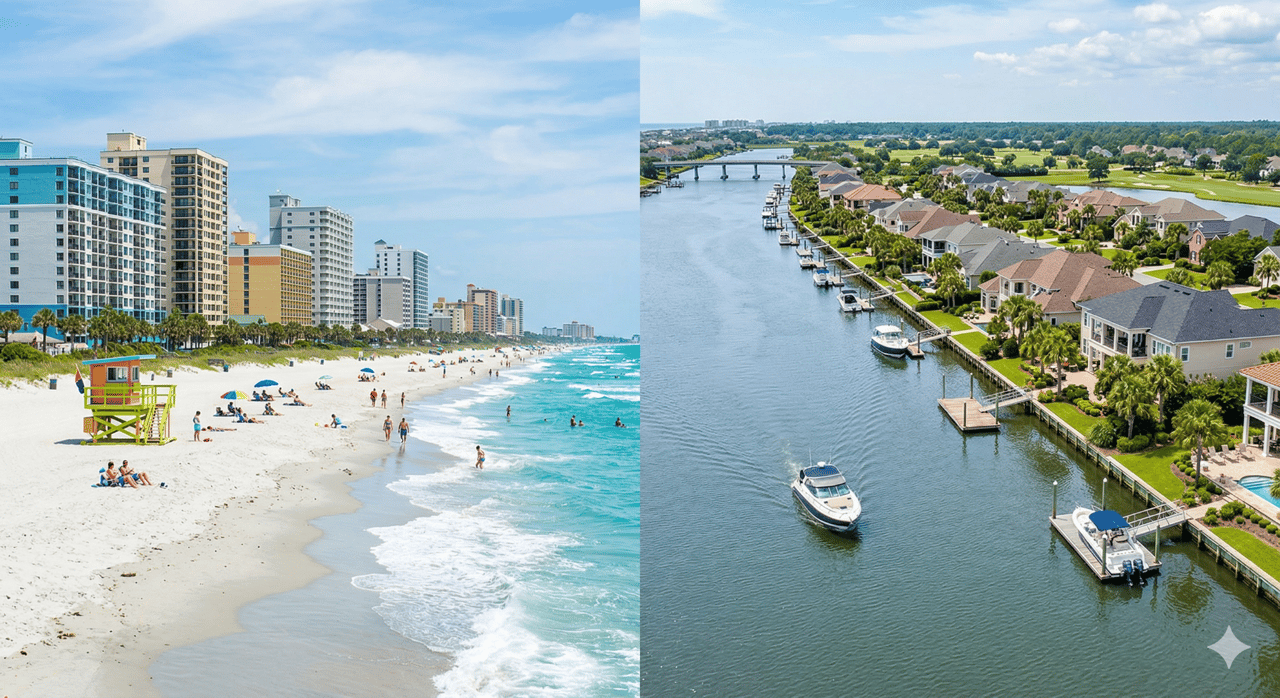
6. Beachside vs. Intracoastal Waterway: What's the Difference in Cost?
One of the most common decisions buyers face in North Myrtle Beach is choosing between oceanfront or beach-adjacent properties versus properties along the Intracoastal Waterway (ICW). Here's an honest comparison.
Beachside Properties
• Higher purchase price—oceanfront and ocean-block properties command a significant premium
• Higher insurance costs due to wind exposure and potential storm surge risk
• More walkability—beach access is immediate, and the lifestyle is very different from driving to the beach
• Typically smaller lots, more condo inventory
Intracoastal Waterway Properties
• Often better value per square foot than oceanfront
• Larger lots, more single-family homes, room for boats and docks
• Still carries flood and wind insurance considerations—buyers sometimes assume ICW properties are immune to these, and they are not
• More of a neighborhood feel, less transient tourist traffic
There's no universally "better" choice between the two—it genuinely depends on what kind of lifestyle you're looking for. Some buyers want to roll out of bed and walk to the ocean. Others would rather have space, a dock, and the quiet of the waterway. Both have real costs and real rewards.
7. What I See From People Moving Here
After working with many buyers and sellers in North Myrtle Beach, a few patterns come up again and again—and they're worth sharing.
Buyers Are Often Surprised by the Value
Many people who relocate here from Northern states genuinely cannot believe what their budget gets them. A buyer who was looking at cramped condos in New Jersey or Connecticut for $500,000 often finds they can purchase a spacious single-family home here for the same price—or a nice oceanview condo for significantly less. The reaction is common: "Why didn't we do this sooner?"
Insurance Is the Number That Gets Underestimated
This is probably the most consistent issue. Buyers see the listing price, calculate a mortgage payment, and feel great about the numbers—until they get their insurance quote. Wind and hail coverage in particular tends to be the line item nobody planned for. When insurance adds $400 or $500 a month to the cost of ownership, it changes the math significantly.
My strong advice: always get an insurance estimate before your offer goes in, not after. It's part of your due diligence, and it helps avoid unpleasant surprises at closing.
Area Expectations Often Shift
Buyers frequently arrive with a clear picture of where they want to be—"I want oceanfront, no question"—and leave having purchased something different and equally happy about it. Once they understand the insurance and maintenance costs of oceanfront living versus the value and lifestyle of an ICW or golf community home, many re-evaluate their priorities. That's not a bad thing. It's good information leading to better decisions.
8. Common Cost Mistakes Buyers Make
Here are the most frequent ways buyers underestimate the true cost of living in North Myrtle Beach—and how to avoid them.
• Focusing only on purchase price. The monthly cost of owning a home here includes mortgage, taxes, insurance, and HOA. All of them matter.
• Ignoring insurance until after the offer. Especially wind and hail coverage. Get a quote early. It's not a formality—it's a real number that belongs in your budget.
• Skipping HOA documents. HOA fees and financial health can make or break a purchase decision, especially for condos. An underfunded HOA can mean special assessments down the road.
• Assuming all areas cost the same. Insurance rates, flood zones, HOA fees, and property tax treatment all vary by location within North Myrtle Beach. Don't assume one neighborhood is the same as another without checking.
• Forgetting about primary residence tax status. If this is going to be your primary home, confirm that with your agent and attorney so you're set up to benefit from the lower property tax rate from day one.
9. Frequently Asked Questions
Is North Myrtle Beach more affordable than other coastal markets?
For most buyers—yes, especially compared to Florida, the Northeast, or the Carolinas' other beach towns like Kiawah or Wrightsville Beach. North Myrtle Beach offers real coastal living at prices that remain accessible for a wide range of buyers.
Do I need flood insurance if I'm not on the water?
It depends on the specific flood zone designation of the property. Some homes miles from the water are still in designated flood zones. Your lender will require flood insurance if the property is in a Special Flood Hazard Area (SFHA). Even if it's not required, it can be worth considering in low-lying areas.
What's a realistic total monthly cost for a $400,000 home?
Here's a rough breakdown for a primary residence:
• Mortgage (20% down, ~7%): approximately $2,130/month
• Property taxes (varies — based on SC’s assessment formula and your county’s millage rate; get a real estimate before closing)
• Homeowners + wind/hail + flood insurance: approximately $300 – $500/month
• HOA (if applicable): $100 – $400/month
Total range: approximately $2,663 – $3,163/month, depending on insurance and HOA. This is why it’s important to look at the full picture, not just the mortgage payment.
Are property taxes lower for retirees or seniors?
South Carolina does offer some additional exemptions and benefits for residents over 65, including a homestead exemption that can reduce the taxable value of your primary residence. Your real estate attorney or a local tax advisor can walk you through what applies to your specific situation.
How do HOA fees for condos compare to single-family communities?
Condo HOA fees are generally higher because they cover significantly more—exterior building maintenance, roof, elevators, common areas, master insurance policy, and sometimes utilities like water and cable. Single-family community HOAs typically just maintain shared amenities and landscaping. Always compare what's included, not just the dollar amount.
10. Let's Talk Real Numbers
Understanding the cost of living in North Myrtle Beach isn't just about knowing the housing market—it's about getting a complete picture of what your monthly ownership costs will actually look like. That includes the mortgage, yes, but also taxes, insurance, HOA fees, and the cost of daily life in a coastal community.
Have questions about a specific neighborhood, property type, or how insurance might affect a home you're eyeing? Reach out. That's what she's here for.
|
Get in Touch with Cathy Cagno |
|
Ready to review the real costs of buying in North Myrtle Beach? |
|
Cathy can help you build a full cost picture before you make any decisions. |
|
|
|
Contact Cathy Cagno | North Myrtle Beach, South Carolina |
|
Real Estate Agent | Buyers & Sellers Welcome |
|
|
© Cathy Cagno | North Myrtle Beach Real Estate